Skip to content
Built Different

Built different.

I've never had a good one-sentence answer to “what do you do?” The honest answer is a paragraph, and it changes depending on the night of the week. This is the longer version.
IThe starting point

Nobody in my family called it entrepreneurship

The word came later. What I actually grew up around was people who figured things out — who saw something that needed doing and did it without waiting for permission or a title. That's the part that stuck. Long before I understood what a business model was, I understood that most things are just decisions someone was willing to make.

I was also the kid who couldn't sit still inside one interest. Sports, then music, then whatever I'd read that month. I got told, kindly and repeatedly, that at some point I'd need to pick. I nodded, and then didn't.

Born in New York, moved to Austin as a kid, and spent most of the years after that being told I would eventually have to pick one thing. I have taken a fairly weird route to get here, and almost none of it looked like a plan at the time.

Most things are just decisions someone was willing to make.
Nobody in my family called it entrepreneurship
Early days
IIPayments & building

I fell into the least glamorous corner of technology and stayed

Payments is plumbing. It's underwriting, risk, compliance, disputes, and a thousand unspectacular decisions that determine whether a real business makes payroll on a Friday. Nobody puts it on a poster. I found it fascinating almost immediately, because it's one of the few places where trust is a measurable thing — you either move the money correctly or you don't.

Building in that world taught me a specific kind of patience. You don't win by being clever once. You win by being reliable ten thousand times, in an industry where a lot of people aren't. That's also the reason I ended up in the harder, more regulated corners of it rather than the easy ones.

It started through the family business and turned into the thing I know best: merchant processing, then the harder regulated categories most processors decline. Payments by day, nightclubs by night, for longer than anyone expected me to keep it up.

Payments is one of the few businesses where trust is a measurable thing.
I fell into the least glamorous corner of technology and stayed
The weekday half
IIIInvesting

Backing people I'd want to be in a room with anyway

Investing came out of operating, not the other way around. Once you've built something, you can hear the difference between a founder describing a business and a founder describing a deck. I'm not a fund and I'm not pretending to be one. I put money and time into a small number of things, usually where I actually understand the mechanics or the operator.

The mistakes I've made were almost never analytical. They were about believing a story I wanted to be true. I'm still working on that one.

I stay close to what I understand — payments, operating businesses, occasionally something in music or hospitality — and I am more useful as a phone call than as a line on a cap table.

Backing people I'd want to be in a room with anyway
Austin, Texas
IVMusic

The other half of the week

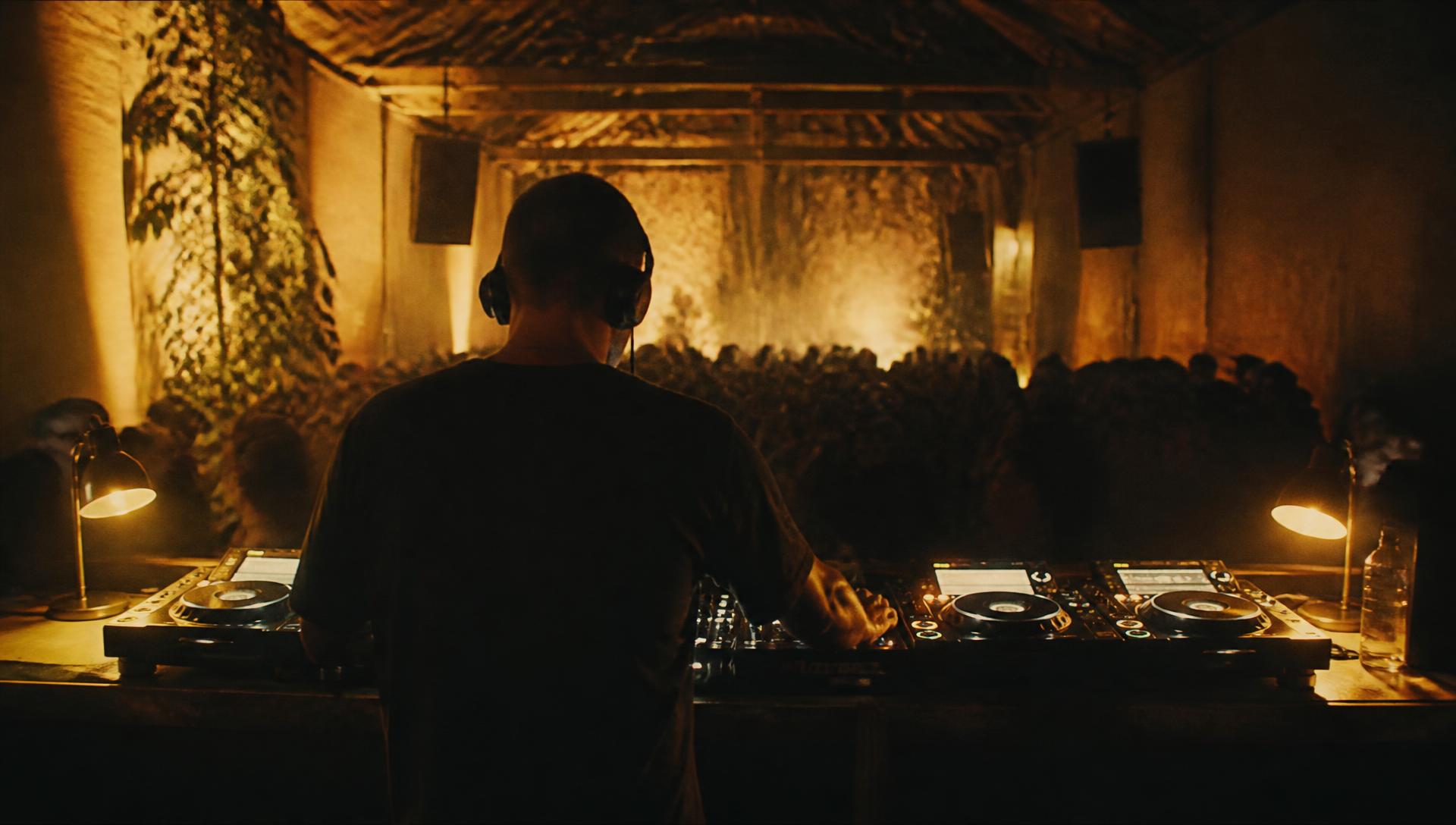
Music was never a phase and it was never a rebrand. I play and produce as DJ Jordan Miller, and I've spent a lot of nights learning the same lesson in a different form: read the room, commit to the risk, don't flinch halfway through it. A set is a live argument you're making to a few hundred people, and they tell you immediately whether you were right.

It's the part of my life that has no strategic justification, which is exactly why I protect it. I've had business ideas arrive in the middle of a set and I've had sets ruined by thinking about business. Both are fine. They're the same brain.

It started as a hobby and quietly stopped being one. Clubs, festivals, private rooms, a country-EDM lane that began as an experiment, and Mixmode — my DJ set with Kristian Cruz playing live electric guitar over it.

It has no strategic justification, which is exactly why I protect it.
The other half of the week
Behind the decks
VAustin, Judaism & community

Almost everything good in my life started at a table

I moved to Austin and did the thing I always do: started inviting people over. That instinct eventually became Third Thursday — a monthly gathering that began small and refused to stay that way. I'm not especially good at networking. I'm decent at hosting, which turns out to be a different skill and a better one.

Judaism is the other half of that. It isn't a holiday-only thing for me; it's a structure — a weekly excuse to stop, eat with people, argue about something that matters, and remember that you belong to something older than your calendar. The philanthropy and the leadership work grew out of showing up consistently rather than out of any plan.

Third Thursday started because I kept setting a date and refusing to move it. Everything else — the friendships, the partnerships, the people who went on to host their own things — happened on its own.

I'm not especially good at networking. I'm decent at hosting.
Almost everything good in my life started at a table
Third Thursday — Austin
VIThe rest of it

Training, travel, books, and the arguments I enjoy losing

I train early because it's the one part of the day nobody can take from me, and because discipline in one place tends to leak into the others. I travel badly and often — too many flights, not enough planning, occasionally the best week of the year. I read more than I finish. I keep a list of things I'm curious about that grows faster than I can work through it.

None of that is a hobby section. It's the reason the work is worth doing, and honestly it's where most of my thinking actually happens.

Training, travel, books, and the arguments I enjoy losing
Early morning
VIIWhy it's all one page

I don't think anyone owes the world a single identity

The advice to pick one lane is usually good advice about focus dressed up as a rule about identity. Focus is real — you can only build one thing well at a time. But the idea that you have to become your job title, and that everything else is a distraction to be apologized for, has never made sense to me.

The version of me that underwrites a risky merchant account and the version that plays until two in the morning are not competing. They ask the same question: what's actually going on here, and who else is in the room? This site is the whole thing in one place, because that's the accurate version.

I'm not finished, and I'd like the next decade to be more interesting than the last one. That's most of the plan.

The advice to pick one lane is good advice about focus dressed up as a rule about identity.

The Journey

A life that never went in a straight line

Born in New York, raised in Austin, four schools, a move to Israel, a stint as a medic, a DJ booth in Tel Aviv, and eventually a payments business. None of it was a plan. All of it turned out to be relevant.

Chapter one

November 19, 1996

Born in New York.

The beginning.

2005

Moved to Austin, Texas.

Austin eventually becomes the city I consider home and the foundation for many of my businesses, relationships, creative projects, and community involvement.

Moved to Austin, Texas.

2014

Graduated high school.

The beginning of a very nontraditional education and career path.

Texas State University

Started figuring out the direction.

Attended Texas State and began working out what direction I wanted my life to take.

Austin Community College

Kept going, kept exploring.

Continued my education at ACC while exploring different interests and opportunities.

Full Sail University

A more creative environment.

Studied in a more creative environment and kept developing an interest in entertainment, media, music, and entrepreneurship.

A more creative environment.

University of Central Florida

Continued at UCF.

Another campus, another set of people, another year of figuring it out.

Starting DJing

Music stopped being a side interest.

Music gradually went from an interest into something much bigger. I began DJing and learning how to perform, entertain crowds, build events, and create experiences.

Music stopped being a side interest.

Moving to Israel

The unconventional decision.

I made the unconventional decision to move to Israel, beginning a completely different chapter of my life.

Volunteer Teaching

Teaching, far outside the plan.

Spent time volunteering and teaching, gaining experience far outside the traditional career path I had originally imagined.

Becoming a Medic

Trained and worked as a medic.

Another unexpected chapter in an increasingly unconventional story — and the one that changed how I think about pressure.

DJing at Shalvata

A booth in Tel Aviv.

While living in Israel I kept pursuing music and DJed at Shalvata in Tel Aviv, combining a growing music career with life abroad.

A booth in Tel Aviv.
Shalvata photo — Tel Aviv

Return to Austin

Back to the city that raised me.

Moved back to the United States and returned to Austin.

Back to the city that raised me.

Payments and the Family Business

Learning the business from the inside.

Joined the family payments business and began learning merchant services, payment technology, sales, entrepreneurship, and business operations.

Learning the business from the inside.

Present day

The unrelated parts turn out to be one thing.

Payments and entrepreneurship, investing, DJing and Mixmode, events, community building in Austin, travel and new ventures. The parts that looked scattered kept feeding each other.

The unrelated parts turn out to be one thing.

2026 → ?

The next chapter is still being written.

My career has never followed a straight line. That is increasingly the point. Business, music, investing, technology, community, and new ideas continue to collide into whatever comes next.

How I Think

Draft — edit freely in src/content/story.ts

Principles I actually use

Not affirmations, and not advice for anyone else. These are the working rules I've arrived at, most of them the expensive way. I expect a few of them to be wrong, and I'd rather find out sooner.
  • 01Ambition

    Ambition is a direction, not a scoreboard

    The useful version of ambition is wanting to be more capable next year than this one. The useless version is measuring yourself against a stranger's highlight reel. I've done both; only one of them produced anything.

  • 02Taking action

    Almost nothing gets clearer from the outside

    Analysis has a short half-life. Past a certain point you learn faster by starting badly than by planning well, because reality gives you information that thinking cannot.

  • 03Discipline

    Discipline is mostly logistics

    I don't have unusual willpower. I have a schedule, a gym twelve minutes away, and a strong preference against renegotiating decisions I already made. Make the default easy and you need far less character.

  • 04Curiosity

    Being interested is a competitive advantage

    Most people stop asking questions the moment they're no longer required to. Staying genuinely curious about how things work — payments, sound, cities, people — compounds quietly for decades.

  • 05Relationships

    Keep a long clock on people

    The best things in my life came from relationships that had no agenda at the time. Be useful without keeping score, and be the person who follows up. That's it — that's most of it.

  • 06Community

    Somebody has to send the invitation

    Community isn't a feeling that arrives; it's a recurring calendar event someone is willing to own. The cost is real and boring: booking the room, chasing the RSVPs, doing it again next month when it rains.

  • 07Faith

    Ritual beats intention

    What I get from Judaism is less about certainty than about structure — a weekly forced stop, a table, a set of questions older than me. Intentions drift. Practices hold.

  • 08Health

    Train for your seventies, not for a photo

    The point is capacity: being able to say yes to the trip, the late set, the long day, twenty years from now. Optimizing appearance is a short game with a bad ending.

  • 09Learning

    Learn from operators, not commentators

    I'd take one hour with someone who has actually done the thing over a month of takes from people narrating it. Read widely, but weight experience heavily.

  • 10Money & investing

    Money buys options, and options are the point

    I care about optionality more than lifestyle: the ability to say no, to be patient, to fund something I believe in. Boring compounding beats exciting bets, and I've paid tuition to learn the difference.

  • 11Calculated risk

    Ask what happens if you're wrong, first

    Almost every risk worth taking has a survivable downside and an asymmetric upside. The ones that ended badly for me were the ones where I never seriously priced being wrong.

  • 12Creativity

    Make things with no business case

    Some output should exist purely because you wanted it to. That's not a break from serious work; it's where the pattern-matching that makes the serious work good actually gets trained.

  • 13Experiences

    Buy the memory, not the object

    The spending I've never regretted is the trip, the dinner, the ticket, the detour. The objects blur together within a year.

  • 14Living deliberately

    Default settings will run your life if you let them

    Most of a life is made of things nobody decided — the standing meeting, the city you happen to be in, the friendships you stopped maintaining. Reviewing the defaults occasionally is the whole practice.

  • 15Not wasting it

    Time is the only unrecoverable asset

    Not a productivity argument. It's the reason I'd rather host the dinner than optimize an evening, and the reason I try not to spend months being mildly unhappy about something fixable.

  • 16Changing your mind

    Update loudly

    Being wrong in public is cheap; staying wrong is expensive. I try to say out loud when I've changed my view and why, partly so I notice how often it should happen.

  • 17Becoming more capable

    The goal is a bigger toolbox, not a better résumé

    Every year I want to be able to do something I couldn't do before — a skill, a room I can now hold, a problem that used to be above my level. That's the only progress metric I trust.

Elsewhere

If you'd rather see what any of this looks like in practice, the rest of the site is the evidence.

Press bio (third person)

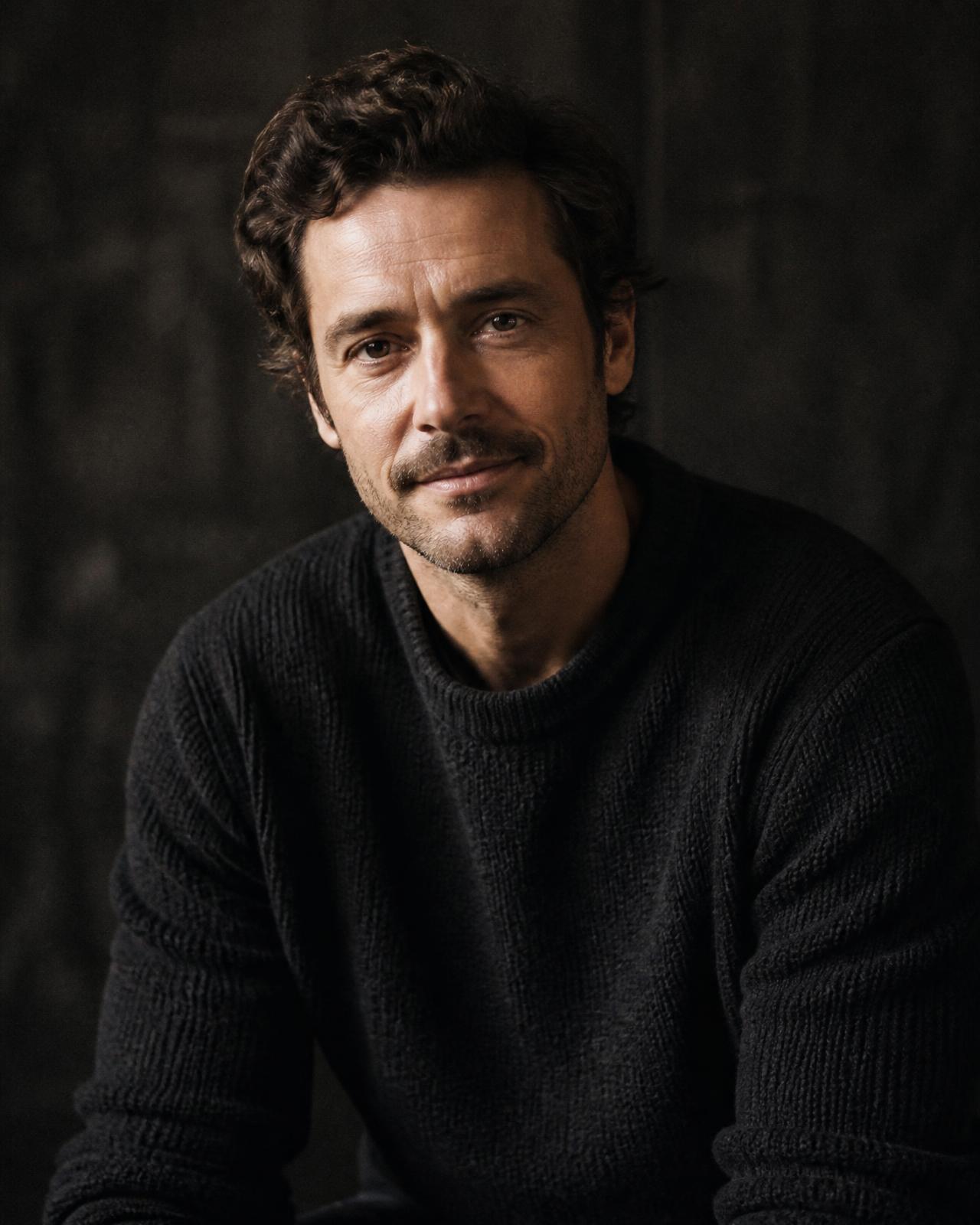
Jordan Miller is an Austin-based entrepreneur, investor, musician and community builder working across payments, technology and culture. He has founded and helped build companies in the payments industry, invests in early-stage businesses, performs and produces music as DJ Jordan Miller, and is active in Austin's civic, philanthropic and Jewish communities.